

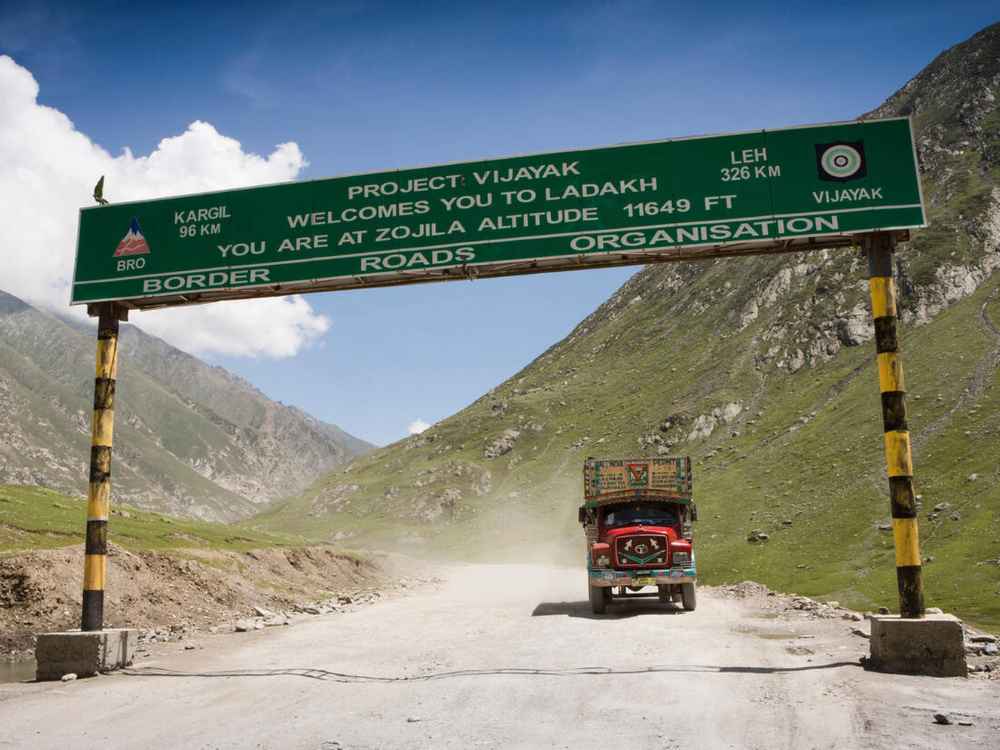

At Baltal, the gateway to the Zoji La in the Kashmir Valley, Sandeep completed his inspection of the integrated smart safety system. Everything checked out—the emergency response protocols were flawless. Turning to the project manager, he offered assurance with quiet confidence, then added a gentle reminder: his two-week leave was due.
That evening, he drove back to his quarters and packed his clothes. His flight from Srinagar airport was set for 10:50 a.m. He glanced at the sky, hoping the valley’s notorious fog would not conspire against him. The thought lingered—would the mountains let him go without delay?
The last time Sandeep returned to his childhood home in Sainikpuri, Secunderabad, was four years ago—on the occasion of his father’s younger sister Sunanda’s funeral. Her absence still weighed heavily on him. For years, her weekly calls had been his lifeline, filling the silence of distant places with warmth and cheer. Five years earlier, when he received the offer to work as a safety engineer at the Zoji La tunnel, he hesitated. The thought of leaving her alone gnawed at him. But Sunanda urged him forward. “It will be challenging, and you will like it.” That encouragement became the compass that guided him into the mountains, even as it pulled him away from home. Sandeep lost his mother when he was two years old. Sunanda assured her brother Niranjan that she would take care of Sandeep, despite her busy practice as an advocate. She remained single. She never shared the reason with anyone.
Sandeep had to visit his hometown, probably for the last time, to sell his house. There was an attractive proposal from a realtor. At the Hyderabad airport, the estate manager, Pravallika, received him. “Nice meeting you, sir, after a long time. “In the cab, she said, “How is the climate at Zoji La these days? I have heard it is notoriously volatile.”
“It is 80C to 220C during daytime, and at night, temperatures drop to 00 to 60. There are sporadic rains and landslides. Tourists often face altitude sickness. The best time to visit the hill station Sonmarg is between May and October.”
When they arrived at the estate, she assisted him with the baggage. “Have some lunch and take time to relax. The realtor will meet you tomorrow evening. Your bed is prepared in Niranjan sir’s room. I’ll return later in the evening.”
She is not only my estate manager, but more of a family member. We both shared the same date of birth, and our families preferred to celebrate together. The tragic incident that shook the neighbourhood 14 years ago and changed her life forever flashes before my eyes. Pravallika and I were in the 9th standard. It was a Saturday evening. My father and Aunt Sunanda suddenly rushed out of the house and returned after several hours with the sad news that Pravallika’s parents had been killed in a road accident. Her relatives worried about the family debts and were happy with my aunt’s proposal. She cleared all the legal issues and officially became her guardian and mentor. She sponsored her education. Pravallika had a melodious voice. When her voice shape shifted and blossomed into an adult resonance, my aunt sent her to a college in Chennai that offered regular music courses. After completing her master’s program, she chose to return to Secunderabad to pursue her career as a music teacher. Aunt Sunanda was happy to see her back and entrusted her with managing our family assets.
At the dining table, Sandeep noticed that the food was not from any restaurant. Brinjal curry stuffed with freshly grated coconut, bitter gourd fry, and the hand-pounded rice- the signature menu of Aunt Sunanda. Pravallika must have prepared the meal, he thought.
Sandeep started exploring the house. The veranda holds the memories of the two naughty children, Pradeep and Rakesh, aged 7 and 9, of my father’s younger brother, Jagadish. He was in the export business in the US, and his wife, Ramani, thought it was unwise to expose them to culture shock at that age. I was their big brother, and their world revolved around me. They were encouraged to read their texts aloud. So, to avoid disturbance during study hours, we kept our distance from each other. Pradeep and Rakesh preferred to sit on the floor with their backs against the wall. My favourite place was the cement bench in the garden. The house stood as a quiet witness to the small challenges the children faced, and to the role I played as their ever-ready troubleshooter. Their requests came in a steady stream:
- “Sandeep, please switch on the bathroom light. I can’t reach the switch.”
- “Please sharpen my pencil.”
- “My teacher says there is a syntax error in my composition. What does it mean?”
- “Sandeep, please unbutton my shorts; they’re tight. I must rush to the bathroom.”
- “Sandeep, would you mind going out to the salon with me?”
Each plea, whether trivial or urgent, stitched itself into the fabric of those days, making the house feel alive with voices and needs.
Every summer, my uncle Jagadish would arrive, his visits as dependable as the monsoon. He loved driving beyond the city limits into the villages, returning with baskets of ice apples. That simple, cooling fruit became one of our favourite seasonal treats, a symbol of his affection and of the carefree joy of childhood summers.
Sandeep went upstairs, stood on the balcony, and looked out over the garden beside the driveway and the concrete bench under the lupin tree, his favourite study spot during his school days. His father Niranjan held discussions with authors on the balcony. He published children’s books under the banner Silver Pen Book Publishing House, and he captured a good market share. During one of the discussions, one young author spoke about interactive books. A talking book would be far more interesting to children than the traditional printed book, he said. During the transition period, Niranjan had to invest heavily, and the profit margins were low. He had to take out bank loans, and at the time, he didn’t anticipate that a business decision would negatively affect family relationships.
One summer night, at the dinner table, Sunanda and Jagadish had a casual conversation about the education system in the US. Cutting in, Niranjan looked at Jagadish and said, “Did you meet our financial advisor?”
Jagadish fumbled. Ramani noticed his hesitation. She said, “Yes, we’ve come to know the publishing business is running at a loss. Income from joint assets is diverted without informing all the stakeholders.”
Niranjan said, “I took loans from banks. The joint family income is intact. You can check the documents.”
“Didn’t your partner withdraw his share?” Jagadish asked.
“No, it’s just gossip.”
“Anyway, the joint asset management system cannot continue eternally,” Ramani said. After two weeks, the assets were divided. Jagadish and Ramani left with their children.
Suddenly, without the children reading their texts aloud, the mornings in the house fell silent. Quiet surroundings should soothe one’s mind, but Sandeep left agitated. Relationships could be so fragile, he wondered. A couple of years later, when Niranjan passed away, Jagadish paid a formal visit, and after that, there was no contact either from him or his children.
After a gentle knock on the door, Pravallika stepped in holding a garland of roses. This is for Bhagawan Baba, she said. At the altar, she lit the lamp and garlanded the photo of Bhagawan Sri Sathya Sai Baba. Sandeep picked up the cymbals and started keeping time. Pravallika got the cue and sang, “Love is my form, truth is my breath, bliss is my food, my life is my message.” That was the favourite song of Aunt Sunanda.
Aunt Sunanda was steadfast in her spiritual sadhana. She meditated in the early hours every day. Often, she asked Sandeep to check whether her phone alarm displayed the exact time. “I have an appointment with God tomorrow, exactly at 5 am.” Sandeep could never understand the concept of having an appointment with God, but he religiously followed her instructions.
Pravallika noticed that he had lost himself in his thoughts and quietly stepped out of the room. The delicate aroma of Arabica brought him back to the present. He noticed that Pravallika was making just one cup of coffee. “Make two cups,” he said.
“Are you expecting a guest?”
“You are my guest.”
“Oh, no, I am the host. Anyway, these host and guest roles have a very short life in this house, till you sign the sale deed.”
“True. I feel I am crushed under the weight of memories. To the realtor, this house is just square footage and equity.”
“The difference is in the beholder’s eyes. To me, this house is a temple of healing. Aunt Sunanda explored every opportunity to keep me happy, cheerful, and fulfilled. This house reminds me of Aunt Sunanda’s magnanimity,” Pravallika said.
“Every room in the house is full of memories. A room is a chapter in the unfinished book, a book of memories,” Sandeep said.
The next evening, the real estate agent met with Sandeep and explained every clause in the sale agreement. “I have included the cost of the furniture, sir. It is a decent offer. Luckily, a registration slot is available next week.” He noticed that Sandeep was indecisive. “Shall I arrange a meeting with the buyer, sir? In case you want to negotiate with him?”
“Leave the papers with me. I’ll call you later.”
***
Sandeep sat in the veranda, bathed in the gentle morning sunlight. A little later, Pravallika joined him. She looked around and smiled wistfully.
“Do you remember how the veranda used to be dressed in balloons and ribbons on your birthday every year?”
“Our birthday,” Sandeep corrected softly.
“Yes,” she laughed. “We were born on the same day. Aunt Sunanda always ordered two identical cakes. They were placed on the great rosewood table, and she insisted we light the candles instead of blowing them out. Nine candles, always nine. ‘A divine number,’ she would say.” Her voice faltered. “The new owner may turn this veranda into the front office of his upcoming school.”
“A school?” Sandeep’s eyebrows rose.
“I thought you knew. The buyer wants to start a school here. If only I had the funds… I would have bought the house myself. I know debt isn’t always about money, but still…”
“There’s another way forward,” Sandeep said after a pause. “We could transform the estate into an academy—a music academy—and name it after Aunt Sunanda.”
Pravallika’s eyes lit up. “That’s a beautiful idea. Her spirit would live in every note.”
“Then this place won’t just hold memories—it will create them. A new chapter in life’s story, filled with moments that are beautiful, meaningful, and enduring.”


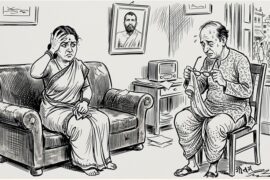































Felt nostalgic … Reminded me my childhood memories at my grand parents houses