

The mosque at the corner of the bazaar kept its own small weather. At night, the courtyard took on a blue hue. Lamps breathed, and the Qurans lined the shelves like waiting faces. Tom James drifted in from the street as if following the smell of bread. He had walked long enough to forget which part of the world he belonged to, and that looseness had the soft pride of a man who thinks he is looking for ruins and finds people instead.
An old cobbler watched him with the economy of someone who had seen every kind of stranger. The man lifted a hand and, as if naming an indifferent fact, spoke: “Go to the mosque. It is God’s house. No one will trouble you.” The sentence fell flat and unremarked, like a stone placed on a grave.
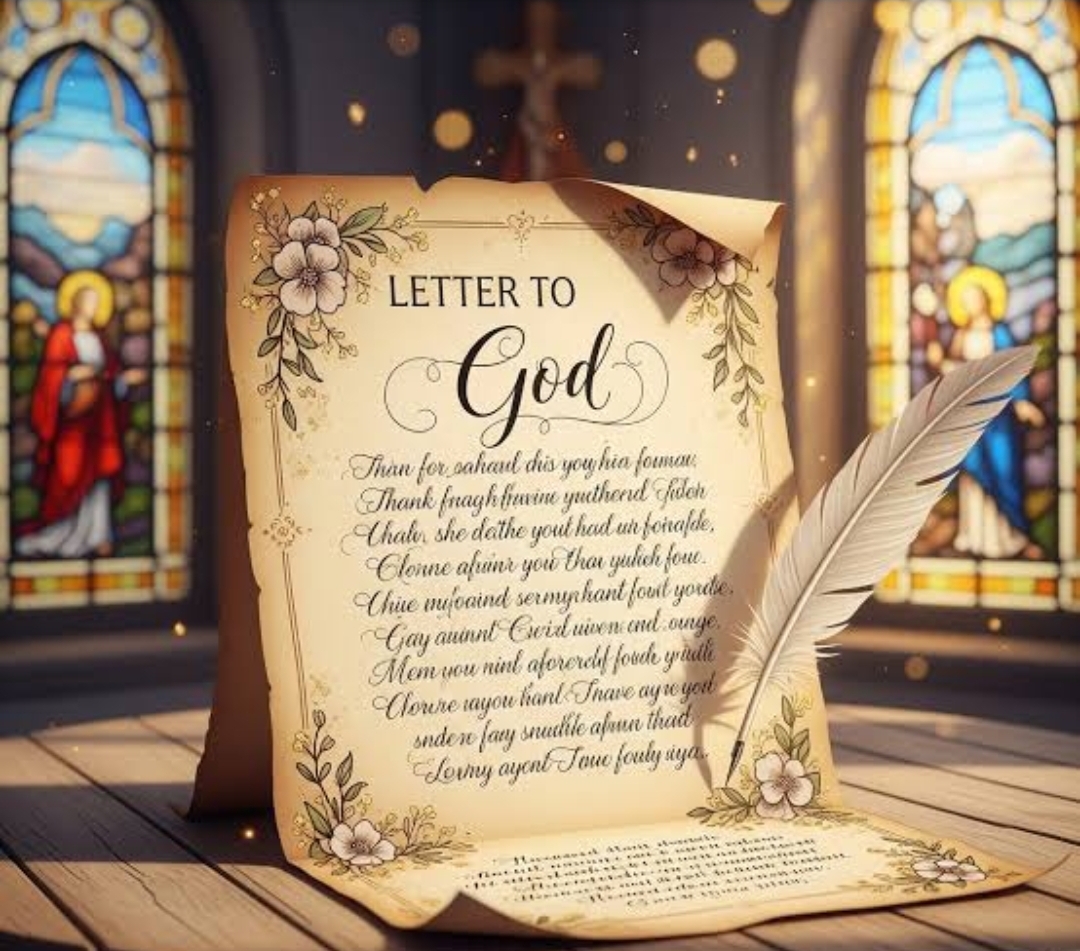
On a low shelf among neat Qurans, Tom found a leather notebook—spine cracked, cover thumbed by someone who read the world for wounds. On the front, written in a slow hand: A Letter to God.
“May I take it?” Tom asked the following morning through a translator.
The cobbler shrugged. “Take it. There’s nothing useful inside. Probably written by a madman.”
Tom opened it.
Roya’s Notebook
In the name of God,
It began with a man who had once had two eyes. He sat on the curb, one empty socket like a small, unfinished story. The alley smelled of heat and dust; the sun made the stones soft and hungry. Blood had flung itself across the pebbles and would dry there like a word that would not be forgiven.
I was fourteen. I remember the velvet handkerchief Mother kept for holy days—she had given it to me on my last birthday—and how my fingers shook when I folded it over the old man’s face. I remember the bottle of water warming in my palm. He said, between breaths, that his employer had lent him a thousand Afghanis to fix his son’s broken leg. He had promised to return it by one o’clock or lose his work. Someone—thieves—had taken it. The police looked at the blood and walked away, as if blood could be catalogued and left to its long business.
I ran home. My feet knew the twenty-minute path as if memory were a rope tied to my ankle. That night I wrote the man’s story in the small leather book beneath my desk. The book was private. It kept small flames for me.
On August 15, 2021, the city fell silent. We hid our books and our voices. “They are Muslims,” people said of the men marching in black, and I learned that names can be folded into knives. My father was in Takhar at the time, a soldier with a soft voice in letters. We hadn’t heard from him for a year. Mother’s worry was a steady drum: not loud but impossible to stop. We were middle-class in a house that had not yet learned hunger’s patience—me, Reyhaneh, and the baby who slept like a question.
Reyhaneh wanted to cut open the world’s skull and smooth it. She wanted to be a neurosurgeon. She went to a prep course for six months, reading as if studying could stitch the air. The week that the city held its breath, she called from the doorway: “Mother—money for a new chapter?”
Mother said, “Under the steam pot.” She always hid things under the steam pot—a hundred Afghanis, a ribbon, a small forgiven debt. I brought the money, and she said, “Roya, eat. We have work today.” The mornings felt like glass—thin and carrying too much.
At seven-thirty, the world decided to be cruel. The window shook. The blast took the roof’s patience. Black smoke moved like an animal across the sky. Mother ran barefoot. She had no time to seek shoes for dignity. In the street, the sun tasted of ash.
The prep center was a place that had learned to be ordinary and was punished for it. Shoes lay as if they had been surprised into stillness; notebooks were burned like last year’s promises. Bodies leaned on one another in ways the living do not learn to do. Finding Reyhaneh among the crowd felt like finding a single page in a house of burned books. Then I saw the pink keychain—Father’s gift for Eid—dangling from a bloodied ID. It was a small thing, ridiculous and faithful as a charm. When Mother saw it, she made a sound that was not a human name.
Reyhaneh lay in the courtyard like an exhausted statue. The right eye was gone; the other was a pale rumour. Two holes rent her chest where an ambition had been kept. She had wanted to hold another brain gently in her hands and set it right. She had wanted to be a maker of careful things. Instead, she reached out and caught the air.
I fell to my knees. The sun was a white accusation. Mother screamed to a father who could not hear. Men in uniforms do not have a corner for grief; their grief is a closed fist. Yet when Father returned—dragged home by rumour and boot after two years—he folded at the door and made a sound that was a new kind of weather. He cried. In that moment, I learned that the phrase ‘men never cry’ is not a rule of nature but a lie we tell ourselves to sleep.
Two months later, I lowered her into the ground. My hands, which had once been silly enough to write, were the hands of an undertaker. Soil became a slow language. I laid the pink keychain in the grave with her because objects are stubborn in their loyalty.
Father came home and did not answer for a long while. Word had already left the city: Dasht-e Barchi—Hazaras shot at the prep centre. Mother’s silence unpeeled for a moment: “They killed Reyhaneh. Did you take revenge?” He said nothing. Revenge is a thing belligerent people wear like an iron bracelet; our house did not fit that armour.
We went to Iran because the world kept trying doors and finding us on the wrong side. We rented a small room with a roof that did not cover the entire area. Migrant rules said: be small, be quiet, and in case of being found, be ready to have your body returned to you like evidence. Once, four men dragged Father across the courtyard as if he were a stain on someone else’s conscience. Mother covered his face with her chador and spat words at them that were not prayers. I screamed, the sound of a child who thinks she can start a war by opening her lungs. They left for a time.
Later, Iran learned to shoot at what it did not want to see. They shot at faces that looked too tired. We came back to Herat—the village far from safe—as one would go to an old friend with no remedies. That night a voice known to our neighborhood announced that a fighter would visit again. Father woke me: “Take nothing but yourself.” I took my diary and Mother’s blue chador—stitching she had made when she still believed any ordinary thing could be made holy.
Kaka Ahmad’s truck was full of people whose hearts were small drums. A child fell and a bullet found him; the reek of hurried life filled the vehicle. Someone pressed a five-year-old’s hand into mine—“Take care of Zahra,” he said, as if goodbyes could be practical. The truck left like a crooked prayer.
Across from me, a boy with dust in his hair spoke as if the world were a test he was sitting: “Because we are Hazaras.” That phrase carried a weathered heaviness. Between the pages of my diary—my private stones—Father had slipped a tiny note: “Wherever you are, know I am proud of your bravery. Mother passed at midnight. Your brother died months ago. I buried him myself. Do not cry.” The note was written in ink that smelled faintly of gun oil and iron. It tried to be a consolation and failed.
At night, I asked the book, ‘Why me?’ The book answered in silence. Sometimes silence is the only honest presence.
Postscript — Mortaza
My name is Mortaza. I was in the truck when Roya pressed the leather book into my hands and said, “If you live, read this. If you die, let someone know.” She looked at the blue chador tied to the strap, like a small flag, and then looked away. A person keeps particular objects like small prayers—Roya’s book was one of them.
I transcribed every sentence she wrote. I placed the notebook on a shelf in the mosque, between the Qurans, because I believed a place used daily for prayer becomes a haven for the poor. I do not know whether that was wisdom or superstition. I listened to the words again and again and found one line that kept returning like a stubborn moth to a lamp: Do not lose your strength; after hardship comes ease. It reads like a proverb; it reads like a dare.
If you read this, do not judge what you cannot lift. Grief is not an accusation; it is a debt paid in small coins.
I left the book in the mosque with a small confession written at the end—my own handwriting, cramped and hurried—because sometimes the one who saves a story alters it slightly to keep it breathing. I am not proud of that. I only wanted a line to be found that would be impossible to ignore: You were meant to save her.
That line sits there like a bell without a clapper. It does not tell you whom to save, or how. It only refuses to be quiet.
Strength is inconvenient; mercy is expensive; waiting is a kind of worship we are not taught in school.
Tom closed the notebook and did not sleep. The mosque was a cathedral of small noises—the turn of a page, a creak, the hush of men praying in the next room. He had expected the rawness of war to be like a headline; instead, it was a collection of little things: a pink keychain, a blue chador, a handkerchief pressed to a wound. He had not expected to be moved by objects.
In the morning, he packed the book like a fragile compass. “Take me where tourists do not go,” he told the driver. The road to West Kabul wound its way through mud-brick alleys and women who moved like private islands. He tasted bread there that had the flatness of hunger; he watched children who made small jokes in a language of necessity.
Zarifah, the sister of the woman who had housed Tom before, brought him tea and bread by the light of a kerosene lamp. Their hospitality was the quiet kind that asks no accounting. Tom reread the notebook, this time aloud in his room while the lamp breathed and his throat tightened. The words did their old work: they punctured the polite skin of pity until something truer bled through.
At the last page, he found the line Morteza had emphasised: You were meant to save her.
He turned the sentence over as a man might turn a key looking for the right door. It might be an instruction, or a trespass of hope. He could argue that a tourist has no capacity for rescue, or that rescue arrives by attention. Tom had, until then, travelled to see ruins and taste distance. Now he felt an odd responsibility—a passable kind of horror. He thought of the pink keychain and the blue chador, and the child’s hand in Roya’s, and he understood that carrying ,ṁṁ a story is a kind of action.
In the days that followed, he tried small things. He spoke to journalists, to people who might publish, and to a woman who ran a small press, taking notes with the careful impatience of someone who had time to be useful. He read the book in public and watched faces change—gratitude is often a slow light. He mailed the notebook to a friend with an address in a city that kept newspapers awake.
But the last line remains awkward and unfulfilled. You can send a message; you can speak its words to rooms that listen; you can write a small essay and push it into the world—each act is a pebble dropped into water. The ripples are not always visible.
One evening, near a street lined with lamps, a boy asked Tom, bluntly and literally: “Did you save her?” The question made the world feel like a test that had a single correct answer. Tom had no triumphant story. He had a notebook, a handful of names, and a decision not to let them sleep in a shelf.
And the book—Roya’s book—remains on a mosque shelf in Herat, somewhere between printed Qurans and the scent of incense. Someone will find it who is not yet ready; someone will read it and decide what saving means. Or it will be ignored. Both endings are possible—both are true.
After hardship comes ease. It is not consolation exactly; it is a predicate and a question. The sentence asks you to choose whether to be the one who waits for ease to arrive or the one who makes it.